This interview is the first part of a series where I speak with women who work in the birth space here in Melbourne. From midwives to doulas and beyond, each conversation explores the different ways families are supported during pregnancy, birth and the newborn weeks.

When you welcome a new baby, support matters as much as the photos you’ll keep. In Melbourne, many families choose more personal care, from private midwives to homebirth, or by inviting trusted professionals into those first newborn days.
As a newborn and birth photographer, I’ve worked alongside incredible midwives while documenting those early moments. Their presence shapes both the birth experience and the start of parenthood.
In this interview, I spoke with a Melbourne homebirth midwife, Kirsteen from Mamtoto Midwives, about her role, what she loves, and how photography fits into those early days. Her insights offer reassurance and inspiration, whether you’re preparing for birth or simply curious about your options.
What is the role of a midwife, and how does it differ in a private practice setting compared to a hospital?
The role of a midwife is actually quite a large umbrella of support. Midwives hold space for women to move through their pregnancy, labour and birth journey in a way that suits them and their families. I feel strongly that the difference between supporting women in private practice as compared to supporting women in a hospital is the level at which we can educate, empower and respect women’s choices. Hospitals are governed by policies and protocols that often reflect the needs of the services, and are less able to support the needs/desires of the women. Private practice for me is a way in which I can educate women, inform them of their choices, and then support whatever choices they make. This is not my journey, it’s not my body, and it’s not my baby, so therefore it’s entirely not my choice. Hospitals are excellent places to meet your baby if you have risk factors or if you simply feel safer in a hospital. Everything in medicine has a place and a purpose. The difference in private practice midwifery is that those services and interventions are used when they legitimately need to be used, not for any other reason.

What do you love most about being a midwife?

Oh, that’s a big question! And I’m not sure that I can give you one aspect. I love watching women find their strength. We live in a world where women are often seen as less than. Where women are underestimated. As a midwife, I journey with women and witness them find their strength through labour and birth that they didn’t even know they had! And then as baby emerges, the look in the woman’s eyes as she realises she just did it! I can’t put that into words. Watching women realise what they are capable of is probably my favourite part.
Can you share how continuity of care makes a difference for families?
All the research around models of care shows that continuity of care is the gold standard for pregnancy, labour and birth. Evidence shows that all assessable outcomes are better with continuity of care than without it.
What stands out to you about the way photography fits into those early newborn days for families?

My favourite part of being a midwife is witnessing a woman find her strength and realise her capabilities. Having a birth photographer there to capture this is so special. Having photos and footage of that moment to keep for the rest of your life is amazing. Women very often leave their bodies during birth and experience an ‘other worldly’ experience. Having someone there to capture those moments allows women to look back on their experience and see things they didn’t previously see. Having a birth photographer present in the space is a beautiful energy that midwives love. I had a birth photographer and/or videographer present for all 3 of my babies, and I absolutely love looking back at the photos and videos. My boys love looking at their birth videos frequently as well. It’s so special.

Any final thoughts you’d like to share?
Becoming a mother, whether that be for the first time or the seventh time, changes you every time. You are never the same woman entering labour as you are coming out of birth. How you feel, and how you are made to feel during the journey, is one of the key factors in how you enter postpartum. It’s imperative that you choose the model of care, the people in your space, and the location of birth that suits you and your family. Not anyone else. And that is different for everyone. Don’t compare with others and what they choose. Really look at what you and your family need. Look at your philosophy around birth, and choose where those needs will be most met. And most of all, trust yourself and trust your body! No one knows your body and your baby better than you do!!
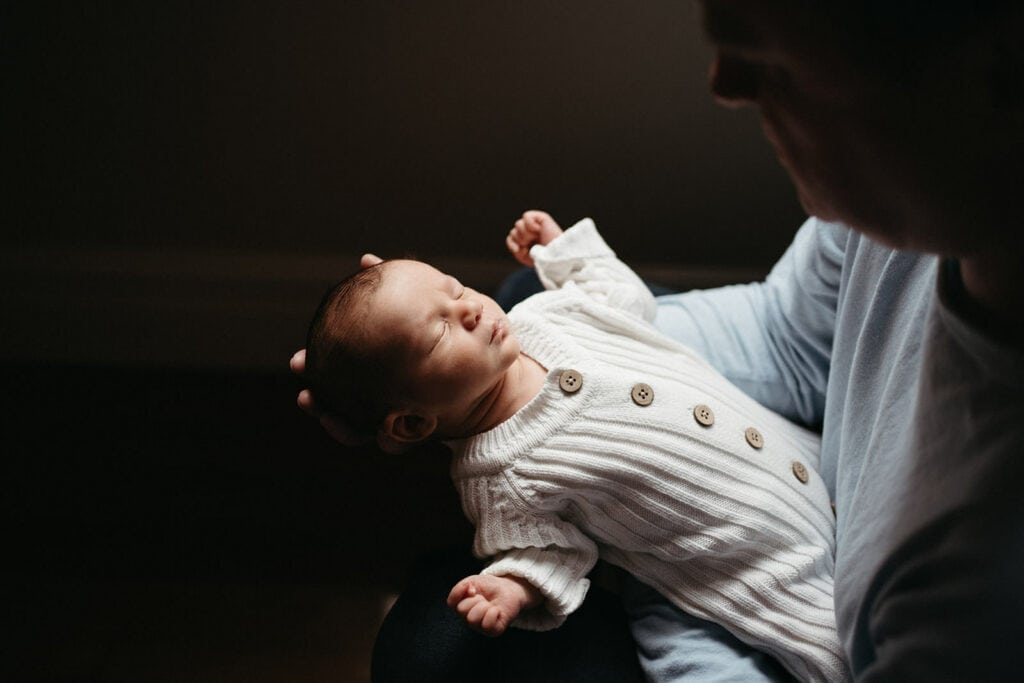
Huge thanks, Kirsteen, for your time and wisdom and also to Marita, who has generously shared her birth images. She worked with Mamatoto (Kirsteen as part of her birth team) for an empowered homebirth. I had the privilege of witnessing and photographing them during birth and a few weeks later.
Please check out Mamatoto Midwives here.
Those early days with your baby are powerful. The care you receive and the people you invite in can shape your transition into parenthood. Photography plays a role too, capturing details and connections you might miss in the blur of newborn life.
If you’re welcoming a baby in Melbourne and want to remember those first weeks at home, newborn photography gives you something real to hold onto. Birth photography isn’t for everyone, but honest newborn photos can honour this time.
I’d love to help you create images that feel calm, natural, and true to your family. You can learn more about my newborn sessions below.